
Water heater repair Shawnee
Water Heater Repair in Shawnee, KS for Leaks, Cold Showers and Pilot Trouble
A water heater that has gone cold, or one leaking onto the floor, turns an ordinary morning into a problem that has to be solved first. Call Shawnee KS Plumbing Experts and a plumber serving Shawnee will look at the unit, tell you what failed and say whether it is worth repairing. If the tank itself is leaking, the honest answer is usually replacement, and you will hear that before any work starts.
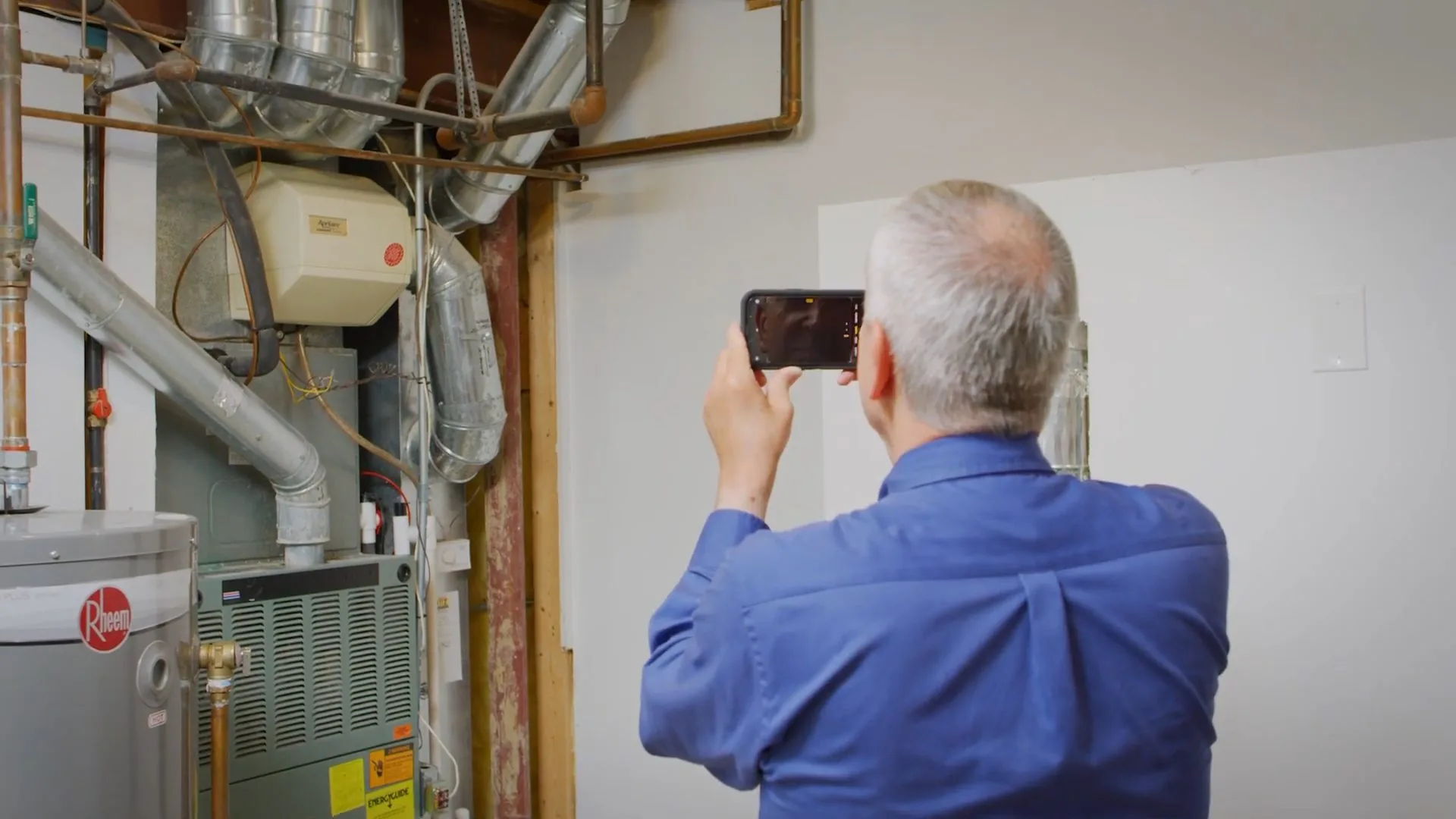
Four signs a water heater problem cannot wait
Most water heater trouble is an inconvenience, but a few symptoms mean you should act within the hour. Treat any of the following as urgent and call right away.
- Water spreading across the floor from the tank, especially toward finished flooring, carpet or electrical outlets.
- Water from the relief valve discharge pipe that keeps running, or a valve that is steaming or hissing.
- A smell of gas near the heater. Leave the building first, then call 911 and your gas utility from outside.
- Scorch marks, soot or a flame that rolls out of the burner compartment.
For a leak, close the cold water supply valve on the pipe above the heater and switch off its power or gas control. That stops new water from entering the tank and gives the plumber a dry place to start.
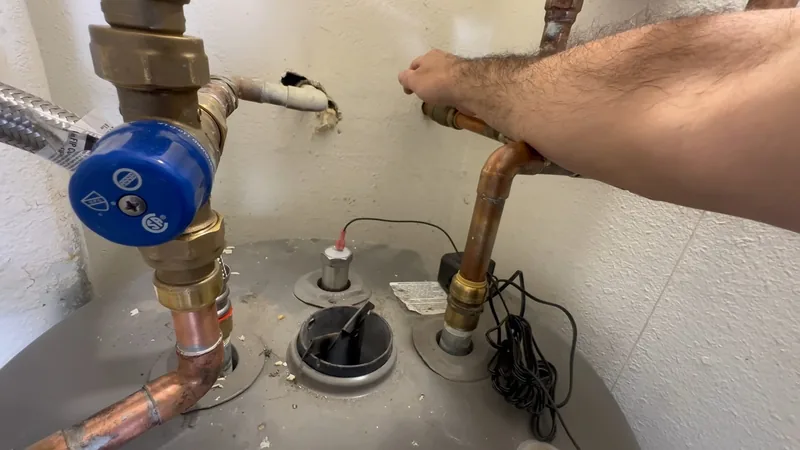
Water around the tank: where it comes from decides the fix
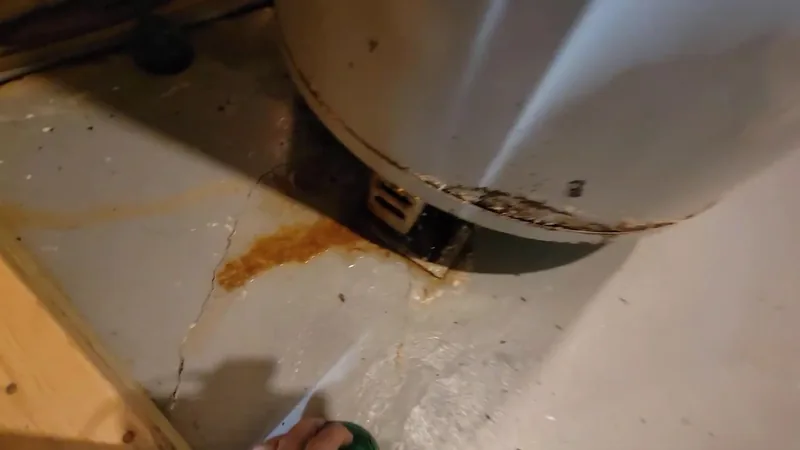
Not every puddle means the tank has failed. Water can come from the inlet and outlet connections, the temperature and pressure relief valve, the drain valve or a nearby pipe, and each of those is a much smaller repair than a corroded tank. A leak from the body of the tank, usually water at the base with no other source, is the one that rarely has a repair.
Dry the area, then watch where the first drop forms. That detail tells the plumber more than a general description does, and it keeps both of you from guessing. If water is already reaching a finished floor, move quickly, because damage grows for as long as the material stays wet.
- Inlet and outlet fittings on top of the tank, which may only need tightening or new connectors.
- The relief valve and its discharge pipe, which can drip when pressure is high or the valve has worn.
- The drain valve at the bottom, a common slow drip that is simple to replace.
- The tank shell itself, where rust streaks or water at the base point to internal corrosion.
Condensation on a cold tank in humid weather can look like a leak. Hold a dry paper towel to the wet spot for an hour. If it stays dry, the tank is probably sweating, and if it keeps getting wet, the leak is real.
Gas water heater repair: pilot lights, burners and thermocouples
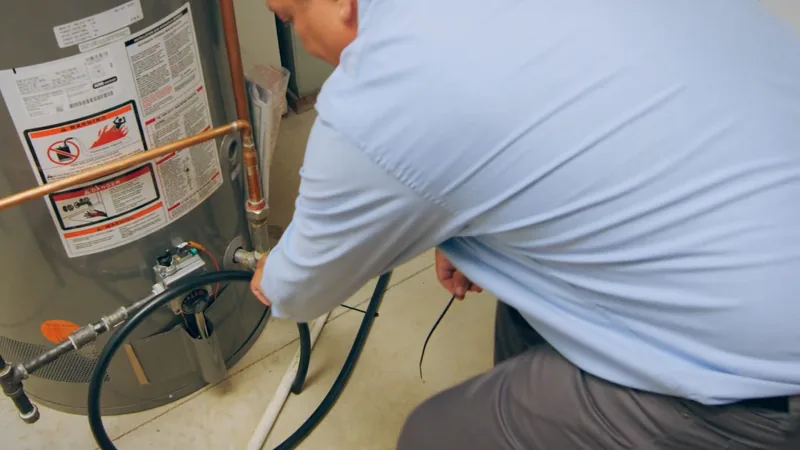
A gas heater that will not make hot water usually has a short list of suspects. A pilot that keeps going out, a worn thermocouple or flame sensor, a dirty burner and a failing gas control valve account for most no-heat calls. Blocked venting matters most for safety, because it can push exhaust into the living space.
Do not keep relighting a pilot that refuses to stay lit, and do not work on gas connections yourself. If you smell gas at any point, leave the building and call 911 and your gas utility from outside. Once the area is cleared, a plumber can inspect the heater and its venting.
Our plumbers test the burner, the flame sensor and the draft before replacing anything, so a small fix does not become a bigger job. When the gas control valve or the tank is the real problem, the visit also settles whether replacement makes more sense. Problems with the supply piping itself fall under gas line repair.
Not sure whether your problem is gas, electric or the tank? Describe what you see when you call and the plumber will work out which of these sections applies. Have the fuel type and the approximate age of the heater ready if you can.
Electric water heater repair: elements, thermostats and breakers
An electric heater has two heating elements and two thermostats, so one failed part can leave you with lukewarm water instead of none. A tripped breaker is worth checking first because it takes a minute. A breaker that trips again as soon as you reset it points to a shorted element, not a nuisance trip.
Water that is hot for a few minutes and then turns cold often means the lower element has failed, since the upper element only heats the top of the tank. Do not open the access panels while the power is on. The plumber tests each element and thermostat with a meter and replaces only the part that failed.
Hot water that runs out fast, smells or comes out rusty
A heater that heats but cannot keep up is often fighting sediment in the bottom of the tank. That layer insulates the water from the burner or element and cuts the usable volume. Flushing the tank can recover some of it, but a thick layer built up over many years may not respond, and popping or rumbling noises during heating usually point to the same buildup.
A rotten egg smell from the hot side only is tied to the tank and its anode rod, not to your supply. Rusty hot water with clear cold water points to corrosion inside the heater, a warning that the tank is near the end of its life. Running both taps lets the plumber tell which problem you have.
When the heater and a fixture seem to fail together
Weak flow at one faucet or shower can look like a heater problem when it is really a clogged aerator or a worn cartridge. Sediment that breaks loose from an aging tank can also clog aerators and showerheads across the house, so a sudden drop in flow at several fixtures right after heater trouble is worth mentioning on the call.
A shower that swings between scalding and cold may have a failing mixing cartridge and a perfectly healthy heater. Tell the plumber which fixtures are affected and whether the cold side behaves normally. Fixture repairs have their own page under faucet and sink repair, and the plumber can look at both while on site.
Repair or replace: the questions that decide it
A repair makes sense when one part has failed on a heater that is otherwise sound. Replacement makes sense when the tank leaks, when the unit has been in service for a decade or more and is failing in more than one way, or when the repair price approaches the price of a new heater. If you are on the fence, ask for both numbers.
The City of Shawnee lists a water heater as a permit type on its residential permit application, so a replacement is not something to leave undocumented. Ask your plumber who pulls the permit, and use the city's permits and inspections page to confirm the requirement. The full process is on the water heater replacement page, and the tank-versus-tankless decision has its own explanation.
What to have ready when you call
- The fuel type, gas or electric, and where the heater sits: basement, closet or garage.
- The brand and age from the rating plate, if you can read it.
- What you see: water on the floor, no heat, noise, odor or a relief valve that is discharging.
- Whether you have already closed the water supply valve and switched off the power or gas control.
- A photo of the leak or the rating plate, if that is easy to take.
That list saves time on the phone and lets the plumber arrive with the right parts. If the heater is leaking right now, say so first.
Give the address, fuel type and what you see when you call
Give the address, the fuel type and what you are seeing. A plumber serving your part of Shawnee is routed to the job.