
Tankless water heater Shawnee KS
Tankless Water Heater in Shawnee, KS: Endless Hot Water Without the Tank
Running out of hot water halfway through a shower, or watching a tank take up a quarter of the utility room, is what sends most people to look at tankless units. Call Shawnee KS Plumbing Experts and a plumber serving Shawnee will check whether your house can take one before you buy. The decision turns less on the heater itself than on the gas line, the vent and the electrical supply behind it.
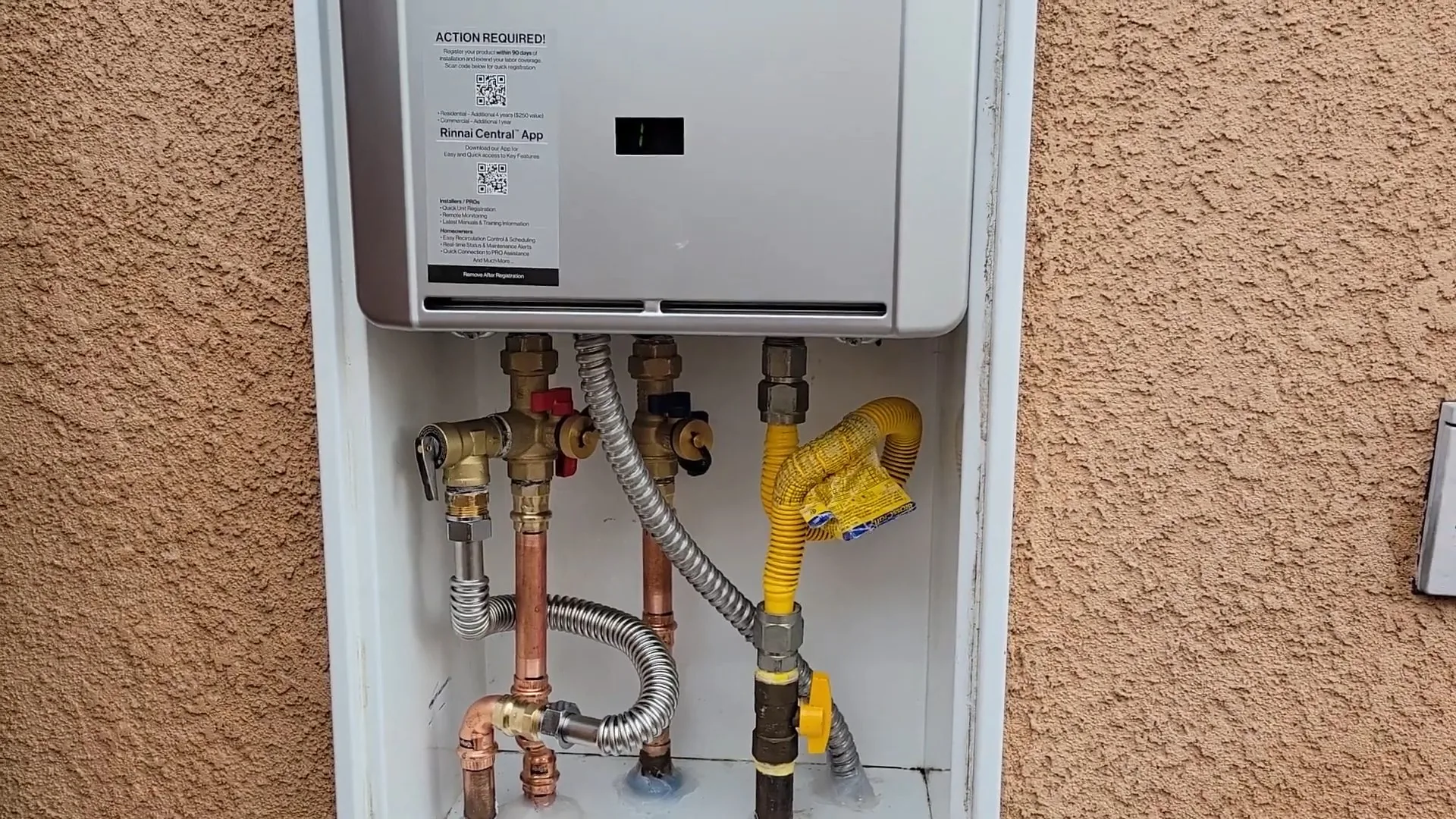
How a tankless heater makes hot water, and where it falls short
A tankless unit heats water only when a tap opens, so there is no tank of stored hot water to run out. Cold water passes through a heat exchanger, a burner or element switches on, and hot water leaves at the temperature you set. That is why the supply never runs out, though the flow rate has a ceiling.
The ceiling is the catch. A unit sized for a small house can struggle if two showers and a dishwasher run at once, and the water gets lukewarm instead of hot. Matching the unit to the number of fixtures that run together matters more than any feature on the box.
Some households also notice a short burst of cold water between uses, because the pipes hold cool water until the heater fires. Recirculation lines and small buffer tanks reduce that, and the plumber can tell you whether either suits your layout.
Gas tankless units: the gas line and vent decide the job
A gas tankless heater burns much more fuel at once than a tank heater, even though it runs for less time. The gas line feeding it has to carry that load, and a pipe sized for a tank often cannot. Upgrading the line is common, and it should be priced into the quote from the start.
The vent is the second big item. Tankless units need approved venting, run straight to the outdoors, and a condensing model drains acidic condensate that needs a proper drain. If you smell gas at any point, leave the building and call 911 and your gas utility from outside. Supply piping problems fall under gas piping repair.
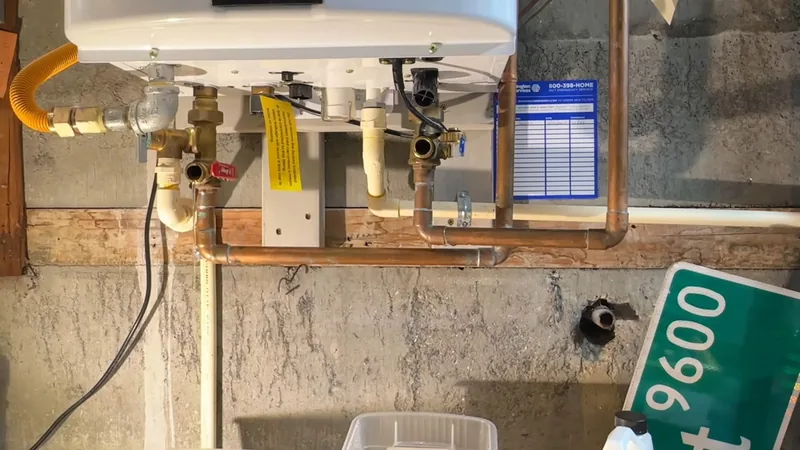
Electric tankless units: what the panel has to supply
Electric tankless heaters draw a large amount of power, and whole-house models often need more than the circuit that fed a tank heater. Your panel may need new capacity, and the wiring has to be sized for the load. An electrician may be involved, and the plumber can say so up front.
Because of that load, electric tankless units suit smaller loads best. Single bathrooms, additions and point-of-use spots are typical fits. For a full house with several bathrooms, gas models or a conventional tank usually make more sense.
Undersink and point-of-use tankless units
A small electric unit mounted under a sink gives hot water at a distant faucet without waiting for the main heater. It suits a kitchen at the far end of the house, a bar sink or a workshop. It does not replace a whole-house heater, and it is limited to one or two fixtures.
These units plug into a dedicated outlet or hardwire to a small circuit, and they connect to the cold line under the sink. Installation is much simpler than a whole-house conversion. If a faucet is the actual problem, look at fixing the faucet itself before adding a heater.
Not sure whether a whole-house tankless unit or a small point-of-use heater fits your home? Describe the fixtures and where the heater would go when you call. The plumber can say which direction to look.
Scale, flushing and keeping a tankless unit working
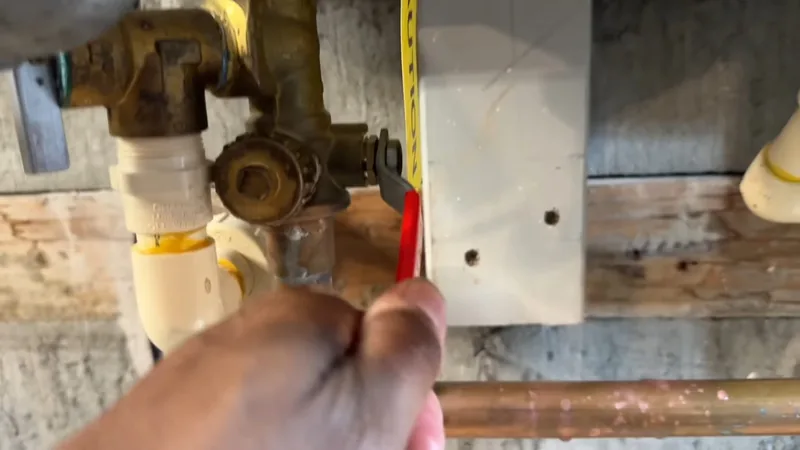
Mineral scale builds inside a heat exchanger over time and cuts flow and efficiency. Manufacturers call for periodic flushing, and the schedule depends on the model and on the water going through it. Follow the manufacturer's instructions, and ask the plumber about isolation valves that make flushing simple.
Warning signs of a unit in trouble include error codes, fluctuating temperature and reduced flow. A tankless heater that has been neglected is harder to repair than one that was flushed on schedule. Repairs on an existing unit fall under repairing an existing unit.
Ask whether the installation includes isolation valves, a condensate drain for condensing models and a clear label showing the manufacturer's service instructions. Those small items decide whether routine care is a quick job or a headache. Keep the manual somewhere you can find it.
Tank or tankless: the questions that settle it
- How many fixtures run at the same time during your busiest hour?
- Can the gas line be upgraded, or is the panel able to take an electric load?
- Is there a clear path for a vent to the outdoors?
- How long do you expect to stay in the house?
- Is saving floor space part of the reason for switching?
If most answers favor a tank, a replacement tank heater is the simpler and less costly route. If you want continuous hot water and the house can support it, tankless is worth pricing. Ask for both numbers before deciding.
Permit and inspection for a tankless installation in Shawnee
The City of Shawnee lists a water heater as a permit type on its residential permit application, and a tankless unit is a water heater. Gas work adds a gas pressure test to the inspection stages the city lists. Ask your plumber who pulls the permit before the work starts.
The city schedules inspections itself and does not accept same-day requests after 2 pm. Details are on the city's permits and inspections page. Changing the gas line size or the panel capacity can change which permits apply, so describe the whole job when you call.
Tankless water heater questions
What is a tankless water heater and is it worth it for my home?
A tankless water heater heats water only when a tap is open, so it never runs out of stored hot water. Whether it is worth it depends on how many fixtures run together, whether the gas line or electrical panel can support it and whether there is a clear vent path. A plumber can check those three things before you buy.
Bathrooms and gas or electric: what to tell the plumber
Tell the plumber how many bathrooms you have and whether the heater runs on gas or electric today. The plumber will go through the gas line, vent and panel with you.