
Basement waterproofing Shawnee KS
Basement Waterproofing and Perimeter Drains in Shawnee, KS: Finding Where the Water Comes From
A wet basement in Shawnee comes from one of two places: a pipe in the house or water from the ground around it. Sealing walls and regrading a yard belong to waterproofing and excavation contractors. Supply lines, drain lines, floor drains and cleanouts belong to a plumber. This page helps you sort the two, so the plumbing causes are ruled out before anyone digs around the foundation.
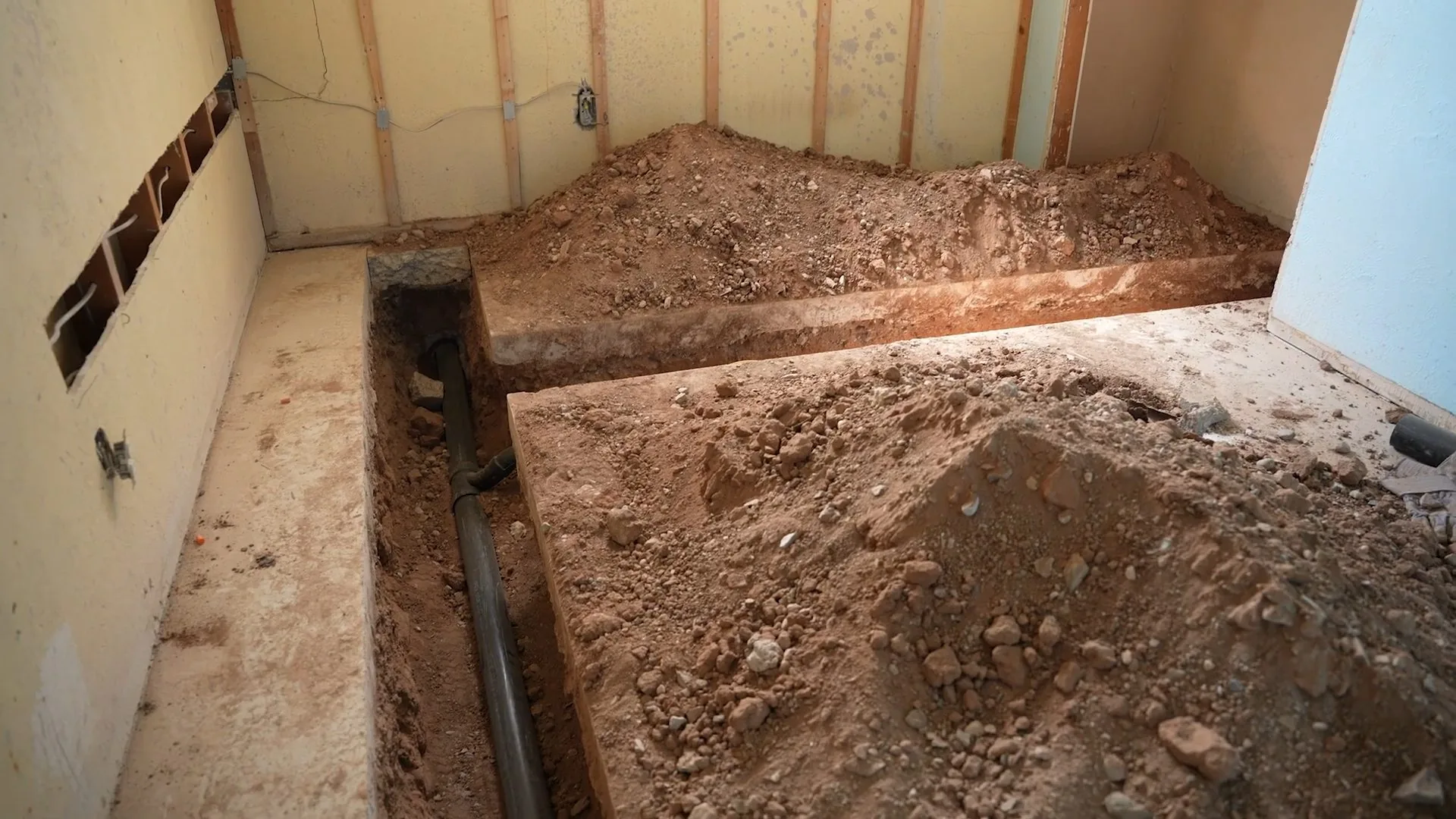
Plumbing leak or groundwater: five checks before you call anyone
The cause decides the trade, so spend ten minutes sorting it out. These checks need no tools and no special knowledge.
- Turn off every fixture and appliance that uses water, then read the water meter. A meter that keeps moving points to a leak in a supply pipe.
- Look at the pipes, the water heater and the washing machine hookups. Water that appears near a pipe, a valve or a tank is a plumbing problem.
- Note whether the water shows up only after rain. A wet floor after a storm, with a dry meter, points to water coming through the wall or floor from the ground.
- Check the floor drain. Water rising out of it points to the drain line or the sewer, not to the foundation.
- Look outside. Downspouts that empty beside the wall, soil that slopes toward the house and clogged window wells all push water toward the foundation.
A meter that moves with everything off, or water on the floor with no rain, is a plumbing problem first. Call a plumber before anyone digs outside.
If the meter test shows a leak, the leak detection page explains how a plumber finds it without opening walls at random.
What Johnson County soil and building rules say about basement water
Water in a basement is not a surprise in this part of Kansas. The Johnson County Building Officials Association residential foundation guideline, hosted by the City of De Soto, describes "a predominance of clay soils with varying expansive characteristics" across the county. Clay drains slowly, so after a long rain water can sit against a foundation wall instead of soaking away. The same guideline sets a 36-inch minimum footing depth below grade.
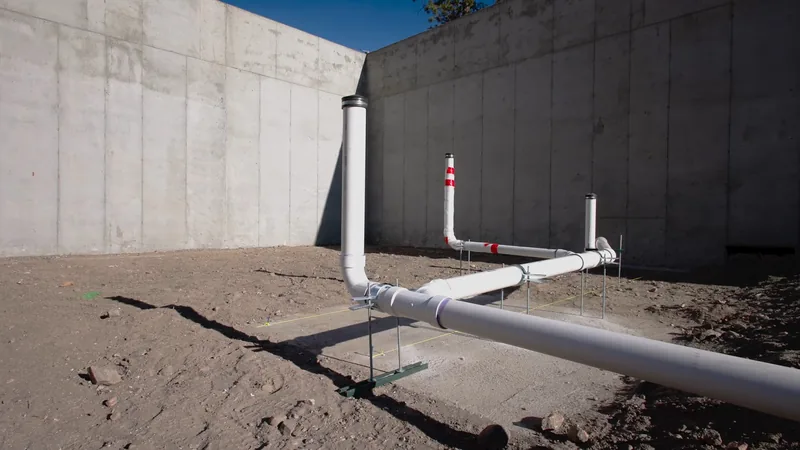
Where a house has usable space below grade, the guideline calls for a continuous foundation drain made of perforated pipe at least 4 inches across, with a way for collected water to drain away by gravity or mechanical means. That requirement is the reason many Shawnee basements have a perimeter drain at all. In a house built to that guideline, the drain is out of sight, so it can work or fail without anyone noticing.
The guideline does not say every home has the same soil, and it does not promise a dry basement. Treat it as context: clay soil and below-grade rooms make drainage around the footing important, and a plumber can only judge your house after looking at it.
Perimeter drains: what they do and where a plumber fits
A perimeter drain, also called a foundation drain, is a perforated pipe laid around the footing and covered with gravel. It collects groundwater before it reaches the wall or the slab and carries it to a place where it can leave. When it clogs with silt or roots, or when its outlet is blocked, water can find its way into the basement anyway.
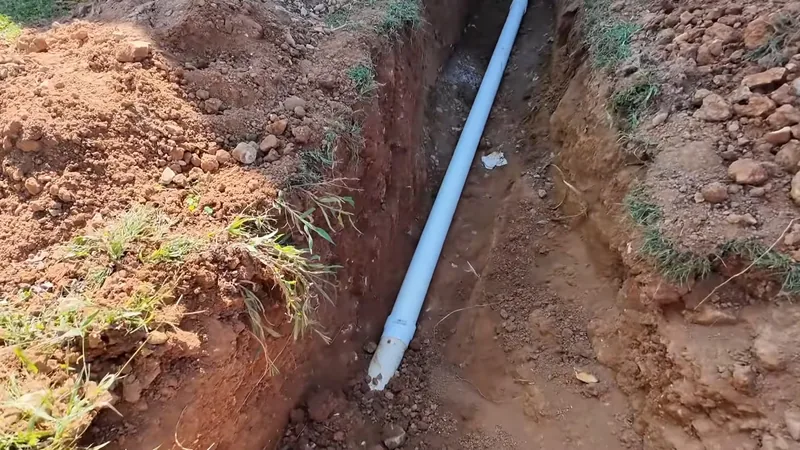
Many foundation drains have no access point, so whether a camera can inspect one depends on the house. Where there is a cleanout or an open outlet, a plumber can run a camera through the pipe and see whether it is clear, crushed or full of silt. Where there is no access, the work moves to the excavation and waterproofing contractors, and a plumber stays involved for any pipe that ties into the house plumbing.
Be careful with promises. Nobody can see a buried pipe without access, so ask any contractor how they will inspect it before agreeing to dig. A camera pass costs far less than an open trench.
Floor drains and cleanouts in a basement that takes on water
A floor drain is a plumbing fixture. It is part of the house drain system, and it can back up when the sewer line is full. Johnson County Wastewater says a backup at a fixture above the lowest level is usually an internal clog, while a backup at the main drain or at several fixtures at once may be a sewer backup. See the Johnson County Wastewater FAQ for the full guidance.
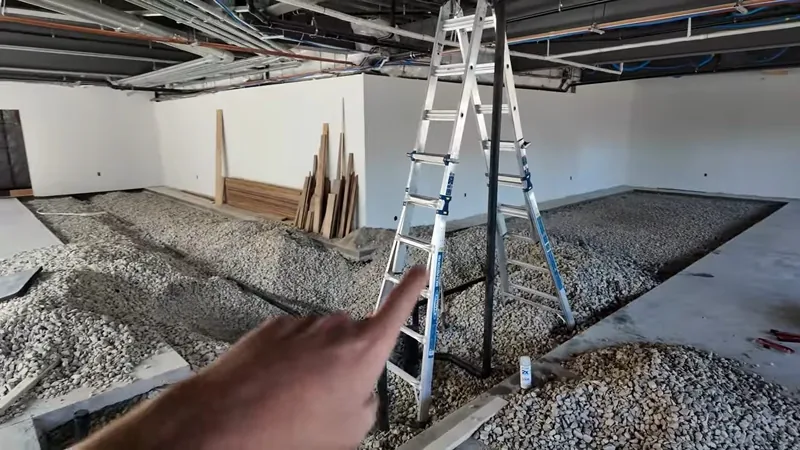
If the floor drain fills during a storm, stop using water, call a plumber and tell Johnson County Wastewater as well so it can check the public main. The pipe from the house to the main is private property, as the sewer line page explains. A drain that clogs again within weeks is a job for drain cleaning and, when roots or scale are involved, hydro jetting.
The Pflumm Woods page covers the same question for a Shawnee neighborhood where stormwater has been a concern for residents.
Rain, downspouts and the public sewer
Rain and groundwater do not belong in the sanitary sewer. Johnson County Wastewater lists sump pumps, downspouts, area and driveway drains, uncapped cleanouts and foundation drains as private connections that can let stormwater into the public system. Its JoCo Inflow program offers an evaluation of the basement, crawl space and outside of the home at no out-of-pocket cost to the homeowner.
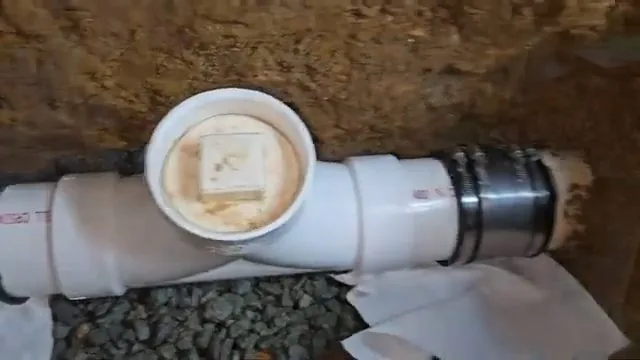
If the evaluation finds a connection that needs repair, the program lets the owner choose a plumber from the county prequalified list or have one assigned. Ask whether the plumber you call is on that list if you want to use the program. An uncapped cleanout is one of the simplest problems on the list, and a plumber can cap it.
What waterproofing contractors do that a plumber does not
Sealing a cracked wall, installing exterior membrane, regrading a yard, extending downspouts and rebuilding window wells are waterproofing and landscaping work. A plumber does not do them, and a company that tells you a plumber can fix every wet basement is overselling. The honest split looks like this:
- Plumber: supply leaks, water heaters, floor drains, cleanouts, drain lines and sewer lines, and any pipe that carries water in or out of the house.
- Waterproofing or excavation contractor: wall sealing, exterior drains and membranes, regrading and window wells.
- You: gutters, downspout extensions and soil slope near the wall, checked after each heavy rain.
If a plumber finds that the water comes from the ground, you will know the cause, and the next call is to the right trade. If the water comes from a pipe, the repair is plumbing work, and the water damage page explains drying afterward.
Before anyone digs around a foundation
Any digging around a Shawnee house needs a locate first. Kansas 811 asks for at least two full working days of notice before digging, excluding weekends and holidays, and a locate ticket lasts 14 business days. Excavation next to a foundation can also damage buried supply and sewer lines, so the locate protects the work as well as the utilities.
Ask the City of Shawnee Community Development Department whether the job needs a permit before any foundation drain or plumbing change starts, because the answer depends on what is being changed. The FAQ page has the permit and inspection questions homeowners ask most.
Basement water questions from Shawnee homeowners
Is a wet basement a plumbing problem?
Sometimes. A leaking supply line, a failed water heater or a backed-up floor drain is a plumbing problem, and a plumber can rule each one in or out. Seepage through a wall or floor joint after rain usually comes from drainage outside the house, which is a different trade.
Does Shawnee clay soil cause basement water?
The Johnson County foundation guideline describes clay soils with varying expansive characteristics across the county. Clay drains slowly, so water can sit against a wall after heavy rain. Soil varies from lot to lot, so only a look at your house can say whether it plays a part.
Can a plumber inspect a perimeter drain?
Where the drain has a cleanout or an open outlet, a plumber can run a camera through it. Many foundation drains have no access point, and then the inspection depends on excavation by another contractor.
Describe the wet basement before anyone digs
Call Shawnee KS Plumbing Experts and say where the water appears, whether the meter is moving and whether it showed up after rain. That tells the plumber which of the two causes to rule out first.